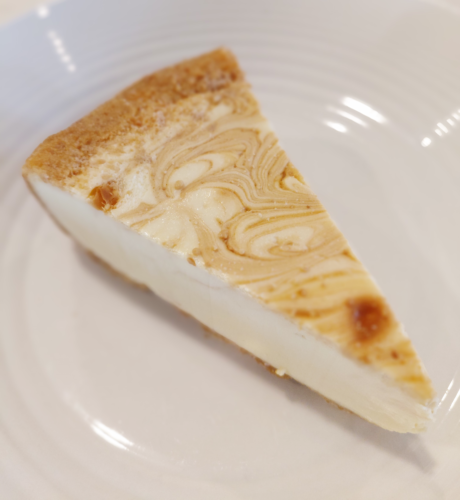
Cheesecake is a civilization-long love affair. Every culture that tasted it kept it, refined it, and adored it… until one city claimed it as its own and transformed it forever: New York.
If you’ve ever closed your eyes over a creamy New York slice and wondered, “Who first had the genius to make this?” — this is the story.
Ancient Greece: The First Cheesecake (2000 BC – 200 BC)
Cheesecake is older than democracy, older than the Parthenon, and older than pizza. Cheesecake didn’t begin as a dessert. It began as energy food for athletes and sacred food for ceremonies. Archaeologists have found tools and records showing soft cheese cakes in Greek island kitchens around 2000 BC. The earliest “cheesecake” was made from:
- Fresh goat or sheep cheese
- Honey
- Pounded wheat
It was patted into a cake and baked on hot stones, not in a pan. By 776 BC, cheesecake became a culinary symbol of strength at the first Olympic Games. Athletes were reportedly served cheesecake for energy and morale. The writer Aegimus even authored what is known as the first cheesecake recipe book in history. To ancient Greeks, cheesecake was victory food.
Ancient Rome: Sacred Dessert of Gods (200 BC – 400 AD)
When the Romans conquered Greece, they brought back more than lands and statues — they brought cheesecake. The Romans upgraded the recipe. They:
- Added eggs (turning it into a true custard)
- Baked it inside a pastry shell
- Flavored it with bay leaves
- Named it libum
Libum was offered as a religious sacrifice to household gods, used during festivals and weddings, and occasionally served to honored guests or military heroes. Roman historian Cato even included a cheesecake recipe in De Agri Cultura, showing how central it was to Roman celebrations. From Rome, cheesecake spread across their empire — to Spain, France, and Britain. Every culture added its own twist. The dessert was unstoppable.
Medieval & Renaissance Europe: Cheesecake Becomes Sophisticated (500 – 1800)
Cheesecake becomes culture — and diverges into many forms. As the Roman Empire expanded, so did cheesecake. But Europe did not standardize it — it regionalized it. Different areas used different cheeses depending on what was native to their land:
Region | Cheese Used | Cultural Identity |
Italy | Ricotta | Soft, angelic, custardy |
France | Neufchâtel | Smooth, tangy, refined |
Germany / Austria | Quark | Light and springy |
Eastern Europe | Farmer’s Cheese | Dense, rustic, hearty |
Britain | Curd Cheese | Mixed with sugar, spices, and dried fruit |
During the Middle Ages and the Renaissance, cheesecake became the dessert of royalty and celebrations, enjoyed in monasteries, noble houses, and holiday feasts. By the 18th century:
- England added spices like nutmeg and lemon.
- France introduced refined sugar and delicate textures.
- Poland and Germany incorporated quark — still used in European cheesecakes today.
But something was still missing… The cheesecake world was waiting for a new kind of cheese.
The Atlantic Crossing (1800 – 1900)
When European immigrants arrived in the United States, they brought their cheesecake traditions with them. New York became the melting pot of:
- Italian ricotta cheesecakes
- German quark cheesecakes
- Polish and Jewish farmer’s cheese cheesecakes
- British curd-based cheesecakes
For decades, cheesecake in America looked like Europe — until one dairy experiment changed everything.
The Birth of Cream Cheese (1872)
When European immigrants brought cheesecake recipes to America in the 19th century, everything changed — not because of a baker, but a cheesemaker. A dairyman named William Lawrence in Chester, New York attempted to reproduce French Neufchâtel cheese for American buyers. He accidentally added too much heavy cream, and instead of ruining the batch……he invented cream cheese.
Cream cheese was:
- Silky
- Dense
- Rich
- Spreadable
- Mild yet tangy
And American bakers went wild for it. What started as an accident became the foundation of one of the world’s most celebrated desserts. Suddenly, cheesecake became creamy, dense, and luxurious — nothing like the European versions. And New York City — bustling with diners, Jewish delis, and bakeries — became the cheesecake capital of the world.
The Birth of the Classic New York Cheesecake (1929)
Styles of immigrant cheesecakes were still in competition throughout the late 1800s and early 1900s — until one restaurant owner redefined the rules. At a New York dinner party in 1929, Arnold Reuben tasted a cheese pie that fascinated him.
He returned to his restaurant and created his own version:
- 100% cream cheese filling
- No ricotta, quark, or farmer’s cheese
- No dried fruit or flavor distractions
- Thick graham crust
- Tall, dense, silky interior
The New York cheesecake was born — and immediately became the new gold standard. Soon, bakeries across Manhattan began their own renditions, sparking decades of fierce cheesecake rivalries, and cementing cheesecake as a dessert of status, culture, and celebration.
The philosophy was bold: Let the cheesecake itself be the star.
Cheesecake Today: A Global Canvas of Creativity
From elite bakeries to airports to global chains and gourmet mail-order brands, cheesecake is now one of the most beloved desserts in the world. And yet, the New York standard — pure cream cheese, dense texture, minimal distraction — remains unbeaten in popularity. Cheesecake today shows its 4,000-year journey in every bite:
Era | Contribution |
Ancient Greece | Energy, victory, celebration |
Rome | Custard structure, ceremonial symbolism |
Medieval Europe | Regional flavors, cultural identity |
America | Innovation, industrial scaling |
New York | The iconic recipe that conquered the world |
The cheesecake of today is a passport dessert — evolving and adapting in every region:
Country / Region | Signature Style |
Japan | Soufflé cheesecake, cloud-light and jiggly |
Italy | Ricotta cheesecake, delicate and milky |
Germany / Poland | Quark cheesecake, tangy and soft |
Basque Country | Burnt cheesecake — caramelized toffee flavor |
USA | New York Cheesecake — dense, creamy, rich, tangy; plus dozens of variations from pumpkin to Oreo to matcha. |
What Cheesecake Represents After 4,000 Years
Across civilizations, cheesecake has symbolized:
- Celebration
- Hospitality
- Skill
- Craft
- Prestige
- Comfort
It has evolved, migrated, adapted, and reinvented itself — and yet we love it today for the same reason athletes loved it 4,000 years ago: It makes us feel good.
Must-Try Destinations for New York Cheesecake Enthusiasts:
- Junior’s (Brooklyn + Manhattan): Legendary New York‑style cheesecake. Dense, creamy, and often called “the city’s classic,” a must‑try for any cheesecake lover.
- Eileen’s Special Cheesecake (NYC): Lighter, soft‑textured cheesecake, almost mousse‑like. Beloved for its delicate balance and variety of flavors; great if you don’t want something heavy.
- Two Little Red Hens (NYC): Boutique bakery known for rich, well‑balanced New York‑style cheesecake with a gently crunchy crust. A local favorite among cake purists.
- Veniero’s (NYC): A 130+-year‑old Italian‑American bakery whose cheesecake blends old‑world tradition with NYC cheesecake culture. Great for history + flavor lovers.
- Ferrara Bakery (NYC): A deeply nostalgic bakery. Their cheesecake brings classic, old‑world dessert charm mixed with the richness New York‑style fans expect.
- Cotton Blues Cheesecake (Mississippi): Small‑batch, handcrafted cheesecakes with no fillers and high‑quality ingredients — shipped nationwide, labeled “Mississippi Made — New York Approved.” Great if you want top‑tier cheesecake at home.
- Eli’s Cheesecake (Chicago): Iconic American cheesecake with a reputation for creamy, well‑balanced cakes on a shortbread crust — a top pick outside New York, shipped U.S.-wide.
- The Cheesecake Factory: Widely available and reliably consistent. Often the first introduction to New York‑style cheesecake for many, great for convenience and big portions.