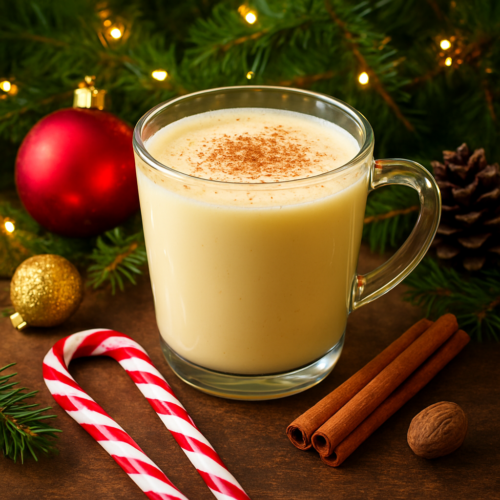
Few drinks capture the warmth, nostalgia, and festive spirit of the holiday season like eggnog. Its creamy texture, sweet aroma, and gentle hint of spice evoke cozy nights by the fireplace, family gatherings, and holiday cheer. More than just a seasonal beverage, eggnog is a centuries-old tradition that bridges Thanksgiving and Christmas, making every holiday table feel complete.
What Is Eggnog?
Eggnog is a rich, dairy-based beverage typically made with milk, cream, sugar, whipped eggs, and warming spices like nutmeg or cinnamon. Many versions include alcohol such as rum, brandy, or bourbon, creating a comforting and indulgent experience for adults. Served chilled or warm, eggnog embodies the taste of the holiday season, perfectly complementing festive meals and desserts.
How Eggnog Started
Eggnog began in medieval Europe as a drink called posset, a hot, spiced milk-and-egg beverage often sweetened with honey or sugar. Originally used as a winter warming tonic, posset was popular among monks and the wealthy.
By the 17th century in England, posset evolved into a luxurious holiday drink for the gentry. Alcohol such as brandy, sherry, or strong ale (nog) was added, and the term “eggnog” emerged: “egg” for the key ingredient, and “nog” for strong liquor.
When English settlers arrived in colonial America, they adapted the recipe using local ingredients. Milk and eggs were abundant, and Caribbean rum replaced brandy, giving rise to the distinctly American version of eggnog.
Eggnog Through the Centuries
Medieval Europe (14th–15th century):
- Posset, a hot, spiced milk-and-egg drink, was a winter staple and tonic.
17th Century England (1600s):
- Eggnog evolves among the gentry with brandy, sherry, or ale, becoming a luxury winter beverage.
Colonial America (1600s–1700s):
- Eggnog adapts to local ingredients; rum replaces brandy.
- Becomes a holiday tradition, served during winter feasts and family gatherings.
18th Century America (1700s):
- Recipes appear in early American cookbooks.
- George Washington serves large batches spiked with rum, sherry, and brandy at festive parties.
19th Century (1800s):
- Eggnog spreads across America, establishing itself as a Yuletide tradition.
- Regional variations emerge: maple syrup in the Northeast, bourbon in the South.
20th Century (1900s):
- Store-bought versions become widely available.
- Eggnog becomes closely associated with Christmas, often served at parties and family dinners.
21st Century (2000s–Present):
- Global variations flourish:
- Coquito (Puerto Rico): Coconut milk and rum.
- Rompope (Mexico): Egg-based, cinnamon-flavored.
- Eggnog con leche (Philippines): Condensed milk-based.
- Modern twists include vegan, lactose-free, and alcohol-free versions.
Eggnog and the Holidays: Thanksgiving to Christmas
Eggnog isn’t just a winter drink—it’s a bridge between Thanksgiving and Christmas, marking the start of the festive season:
Thanksgiving
- Serve eggnog as a welcome drink before the Thanksgiving feast.
- Its creamy, spiced flavor pairs beautifully with roasted turkey, pumpkin pie, and autumn desserts.
- Adult versions with rum, bourbon, or brandy can create a festive toast to kick off the holiday season.
Christmas
- Eggnog is iconic for Christmas, a drink that evokes family gatherings, holiday parties, and cozy winter nights.
- Many families have traditions of making homemade eggnog together, a ritual that strengthens bonds and creates lasting memories.
- Variations like coquito (Puerto Rico) or rompope (Mexico) highlight eggnog’s global holiday influence.
Who Loves Eggnog?
Eggnog appeals to a wide range of holiday lovers:
- Holiday Enthusiasts: People who cherish Thanksgiving and Christmas traditions.
- Fans of Creamy, Sweet Drinks: Those who enjoy dessert-like beverages.
- Adults Who Enjoy Spirits: Rum, brandy, or bourbon lovers enjoy spiked versions at festive gatherings.
- History and Food Buffs: Fans of culinary history appreciate eggnog’s rich heritage.
- Global Holiday Fans: People in Mexico, Puerto Rico, the Philippines, and elsewhere enjoy regional eggnog variations.
- Children: Non-alcoholic versions are a holiday treat for all ages.
Why Eggnog Is the Ultimate Holiday Drink
Eggnog is a ritual that spans centuries. From medieval Europe to colonial America, from Thanksgiving feasts to Christmas celebrations, eggnog embodies comfort, indulgence, and togetherness. Its creamy richness and gentle spices make it the perfect drink to celebrate the season, toast with loved ones, and create lasting memories.
Whether spiked with spirits or served as a cozy treat for kids, eggnog remains one of the most beloved holiday beverages around the world, marking the joyous transition from Thanksgiving to Christmas.
Making Eggnog at Home
Classic Eggnog Recipe:
- 4 cups whole milk
- 1 cup heavy cream
- 4 large eggs
- 3/4 cup sugar
- 1 tsp vanilla extract
- 1/2 tsp ground nutmeg
- Optional: 1/2–1 cup rum, brandy, or bourbon
Instructions:
- Beat eggs and sugar until fluffy.
- Slowly whisk in milk and cream.
- Add vanilla and nutmeg.
- Chill for at least 2 hours.
- Optional: Stir in alcohol before serving.
To Serve: Top with whipped cream and a sprinkle of nutmeg and cinnamon for holiday flair.