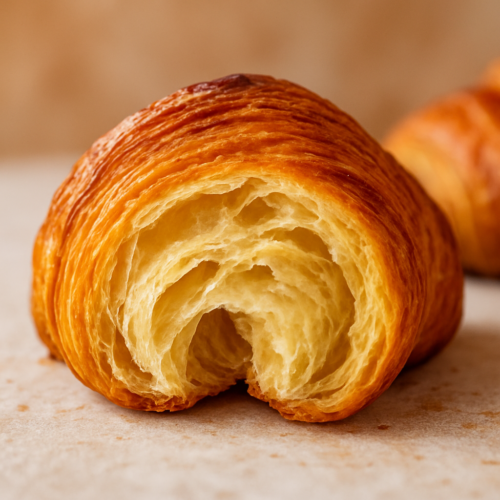
Flaky, golden, and irresistibly buttery, the croissant is more than just a pastry—it’s a culinary legend. Its delicate crescent shape, which gives it the very name “croissant”, carries centuries of history, from the siege of Vienna in the 17th century to the bustling bakeries of Paris. Along the way, it has touched royal courts, inspired bakers across Europe, and become a symbol of indulgence, craftsmanship, and everyday elegance.
A Crescent of Legends: The Origin Story
The croissant’s story is as layered as its dough. While many assume it is purely French, its roots reach deeper into European history. The most widely told legend traces back to 1683, during the siege of Vienna by the Ottoman Empire.
The Ottoman army surrounded Vienna, hoping to capture it, but the defenders—along with Polish reinforcements—successfully repelled the attack. This victory preserved Vienna and much of Central Europe from Ottoman expansion.
According to folklore, Viennese bakers, working through the night, heard the Turks tunneling under the city walls. To celebrate the city’s survival, they baked pastries in the shape of a crescent—the symbol on the Ottoman flag. These early pastries, called kipferl, laid the foundation for what would later evolve into the croissant.
The name “croissant” comes from the French word for “crescent”, referencing its iconic curved, moon-like shape. While the pastry itself has Viennese origins, the French not only perfected the recipe but also gave it a name that captured its elegance and visual identity.
By the late 18th century, the croissant had firmly established itself in France. French bakers introduced laminated dough techniques, folding butter into layers of dough to create the airy, melt-in-your-mouth texture we know today. Some historians even credit Marie Antoinette, the Austrian-born queen of France, with popularizing the pastry in Parisian cafés, bringing a taste of Vienna to the French elite.
The Art and Science of Croissants
Creating the perfect croissant requires the art of lamination: butter is folded repeatedly into the dough to form delicate layers. When baked, the steam from the butter expands, puffing up the pastry and creating the signature light, flaky texture.
Fun Facts: Lamination can create up to 27 layers in a classic French croissant.
Croissants come in many delightful variations:
- Classic Butter Croissant – The timeless favorite, golden and rich.
- Pain au Chocolat – Croissant dough wrapped around chocolate.
- Almond Croissant – Filled with almond paste and topped with sliced almonds and glaze.
Cultural Icon and Global Influence
In France, croissants are more than a pastry—they are a ritual. Mornings often begin with a croissant paired with a café au lait, enjoyed slowly in a Parisian café. Yet, the croissant has traveled far beyond French borders. In Japan, bakeries have embraced croissants with inventive twists, while in the United States, artisanal shops elevate them with fillings like pistachio cream, matcha, and savory options like ham and cheese.
The croissant represents refinement, patience, and everyday indulgence. There’s an unspoken elegance in biting into a perfectly baked croissant: the crisp outer layer giving way to soft, buttery interior—a reminder that craftsmanship matters, even in the smallest pleasures of life.
Perfect Croissant Pairings
Classic Butter Croissant:
- Drink: Café au lait, espresso, or hot chocolate
- Spread: Light jam or honey
Pain au Chocolat:
- Drink: Cappuccino or mocha
- Extra: Sprinkle of powdered sugar or a drizzle of chocolate
Almond Croissant:
- Drink: Black coffee or green tea
- Extra: Almond butter or a thin glaze for extra indulgence
Savory Croissant (ham & cheese, spinach, etc.):
- Drink: Freshly brewed coffee, herbal tea, or sparkling water
- Extra: Mustard, cream cheese, or a side salad
Tip: For all croissants, enjoy slow bites, savor the buttery layers, and let your beverage complement the flavor rather than overpower it.
My Croissant Experience
I have always been in love with croissants. There is a quiet magic in their buttery layers—gently tearing them apart, inhaling their rich golden aroma, and savoring each bite slowly. It is a simple joy, discovered layer by layer.
A croissant, though made from only flour and butter, is a delicate masterpiece of art. Its making demands patience, precision, devotion, and attention to detail—reminding us that true beauty often emerges from time, care, and thoughtful effort.
To eat a croissant mindfully—feeling its delicate texture, its crisp edges giving way to softness, letting the butter melt gently in your mouth—is a quiet act of bliss. It teaches us to value the process, not only the outcome. It whispers a lesson: joy is not always found in the grand, but often in the layered, slow quiet moments of life.
The next time you enjoy a croissant, let it remind you that bliss lives quietly in life’s simplest moments—the first sip of coffee, a friend’s laughter, or the peace of early sunlight. Like a croissant, life’s sweetest experiences are delicate, and meant to be savored slowly, layer by layer.
Croissant Journeys Worth Taking
If you want to taste truly exceptional croissants, here are some of the best destinations around the world:
Paris, France
Lyon, France
Montreal, Canada
- Duc de Lorraine – Flaky, buttery, and non-greasy croissants crafted with care.
New York, USA
- Bien Cuit – Small-batch, artisan croissants praised for texture and flavor.
Vienna, Austria
- Demel – Traditional Austrian pastry house, honoring the kipferl origin of croissants.
- Café Central – A historic café serving classic Viennese-style croissants.